We had Statue of Liberty tickets for 9 this morning. That meant we had to get up at 7, leave by 7:30 to walk the 30+ minutes to the station then do security check in at 8:30 before boarding the ferry. Whoever thought 9 am would be a good time for this group clearly did not anticipate waking up 7 teenagers and two 10 year olds on a Sunday morning. We managed to get everyone moving though, even if it wasn’t the most cheerful bunch given the early hour.
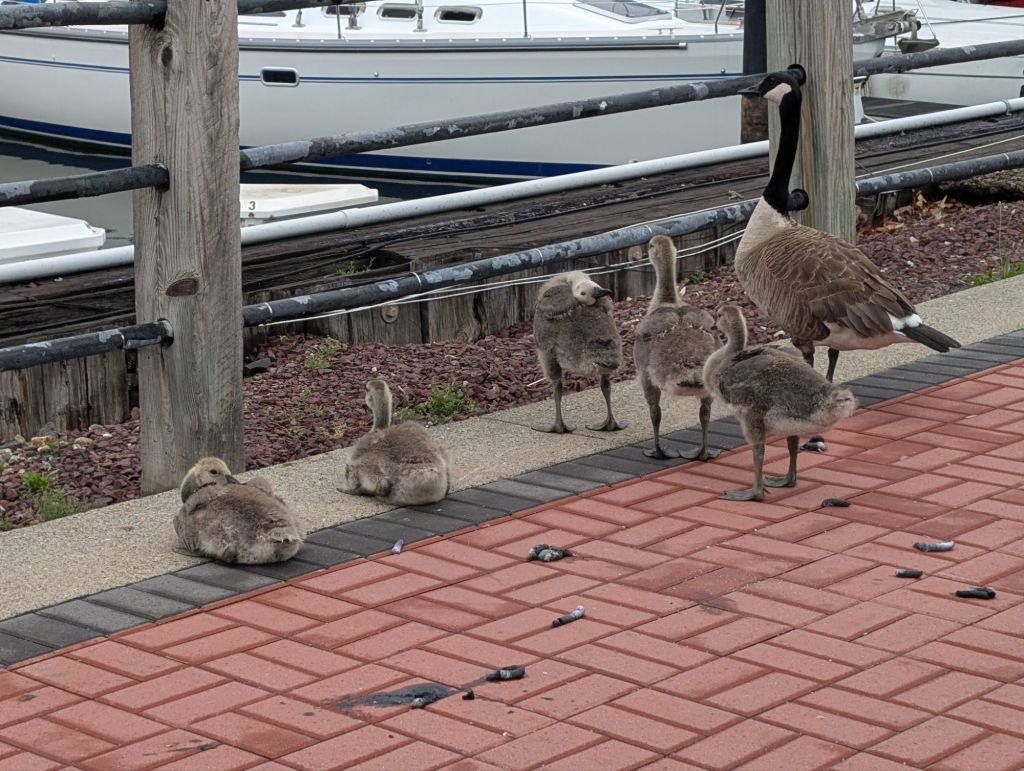
On our walk we saw these big goose babies.
The station was actually an old train terminal/ferry port.


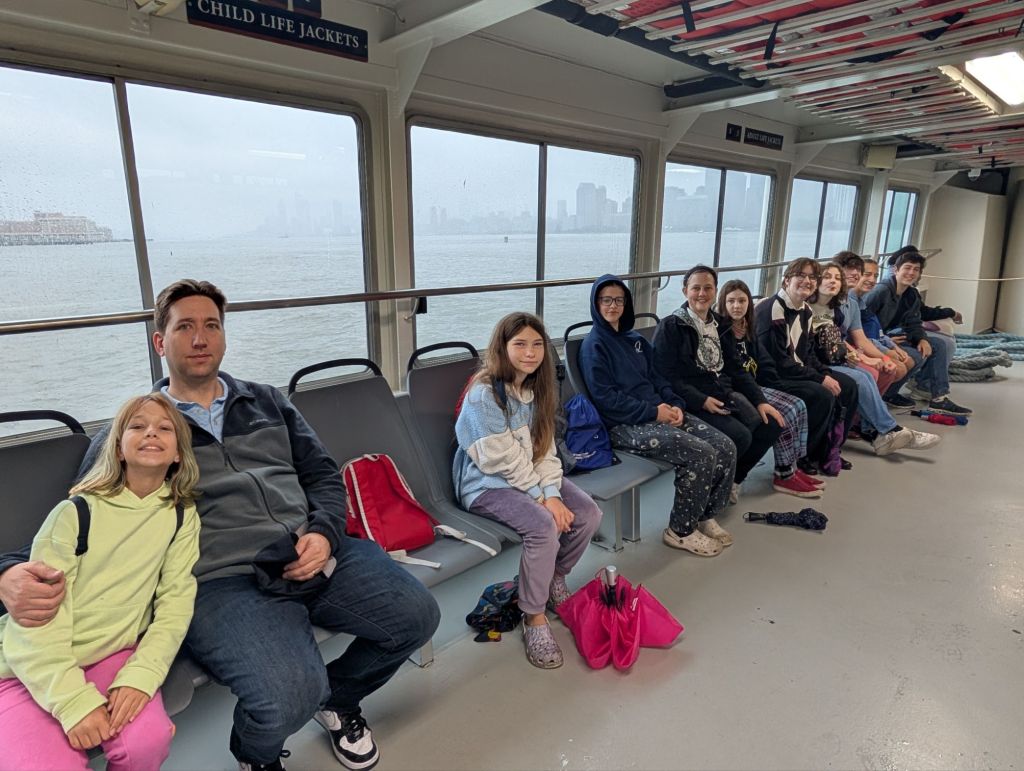
While waiting for the ferry to board, we made Super Umbrella by combining all the umbrellas together.

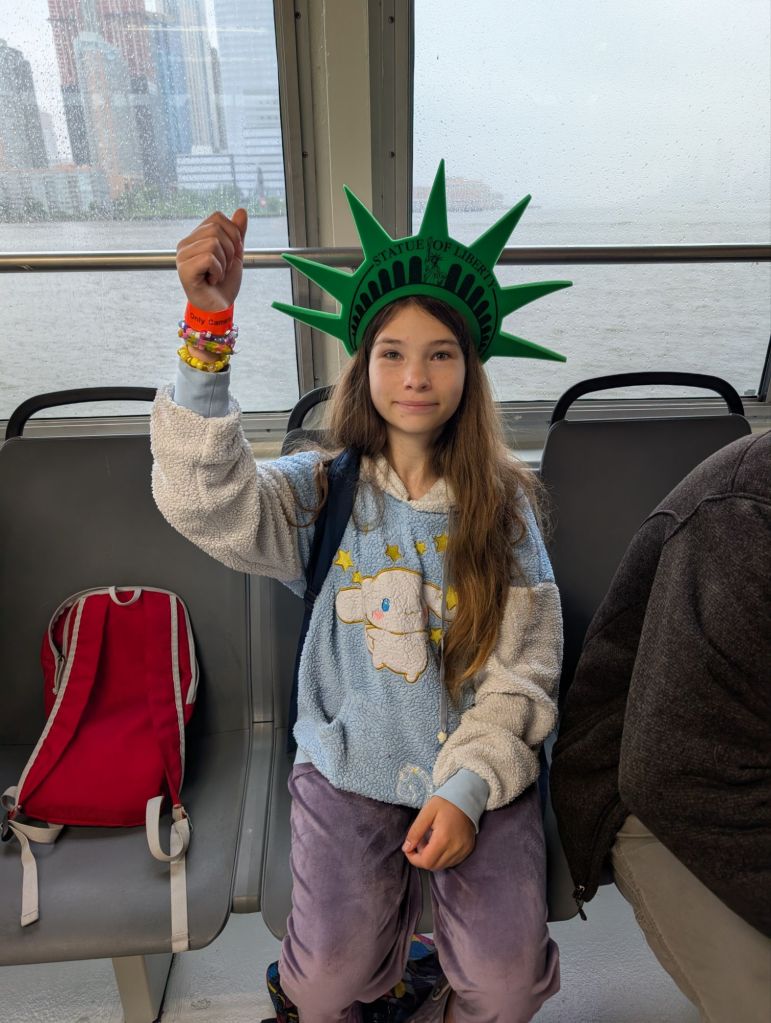
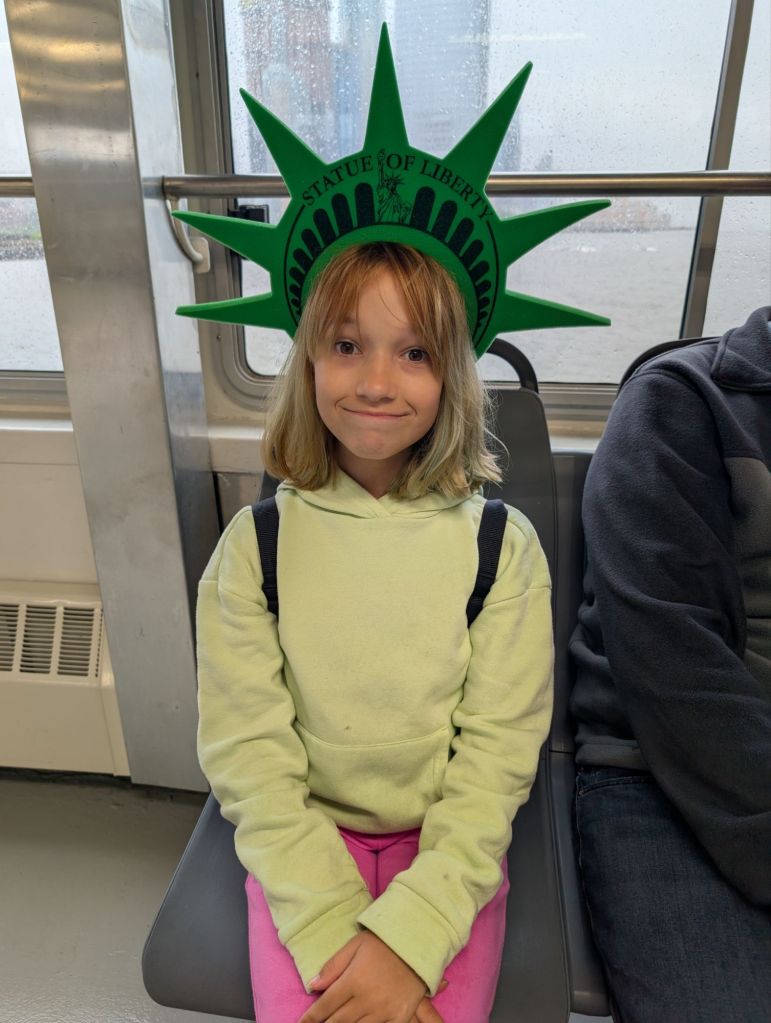
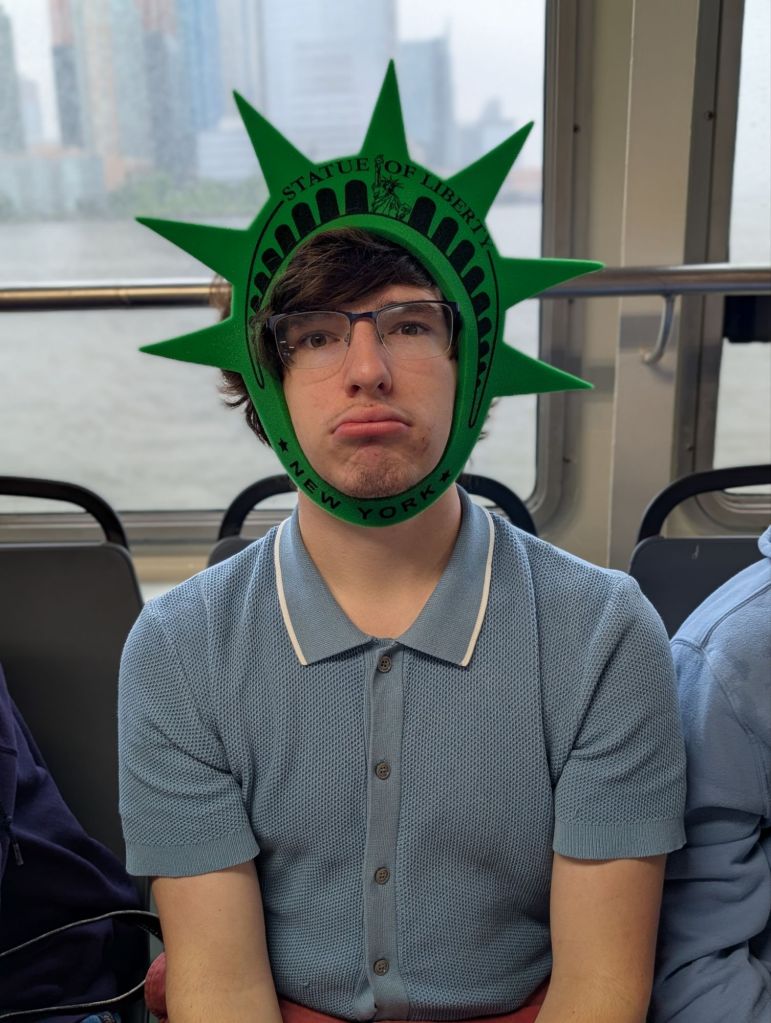
On the ferry I bought one of these crowns and we took turns wearing it.

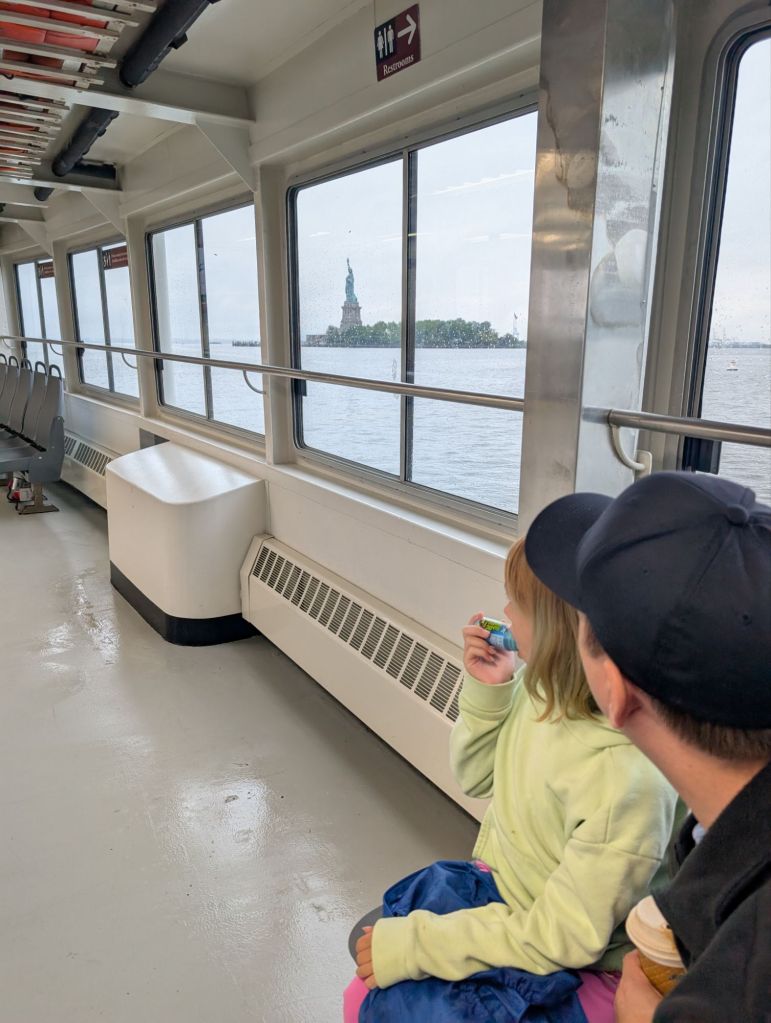
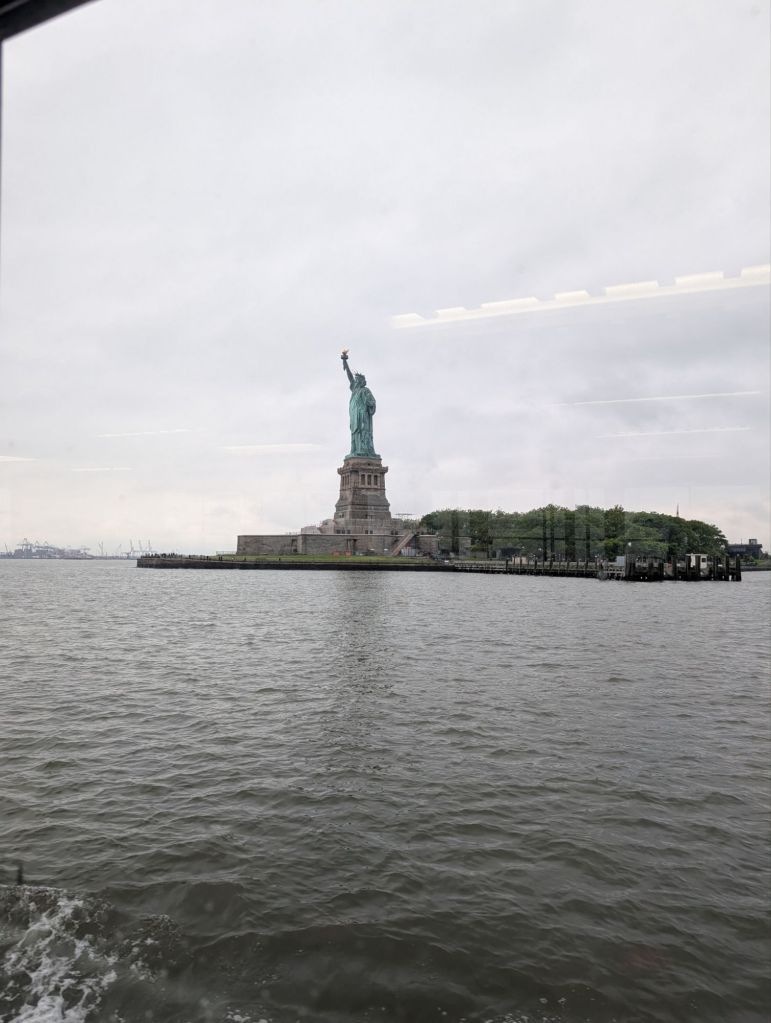
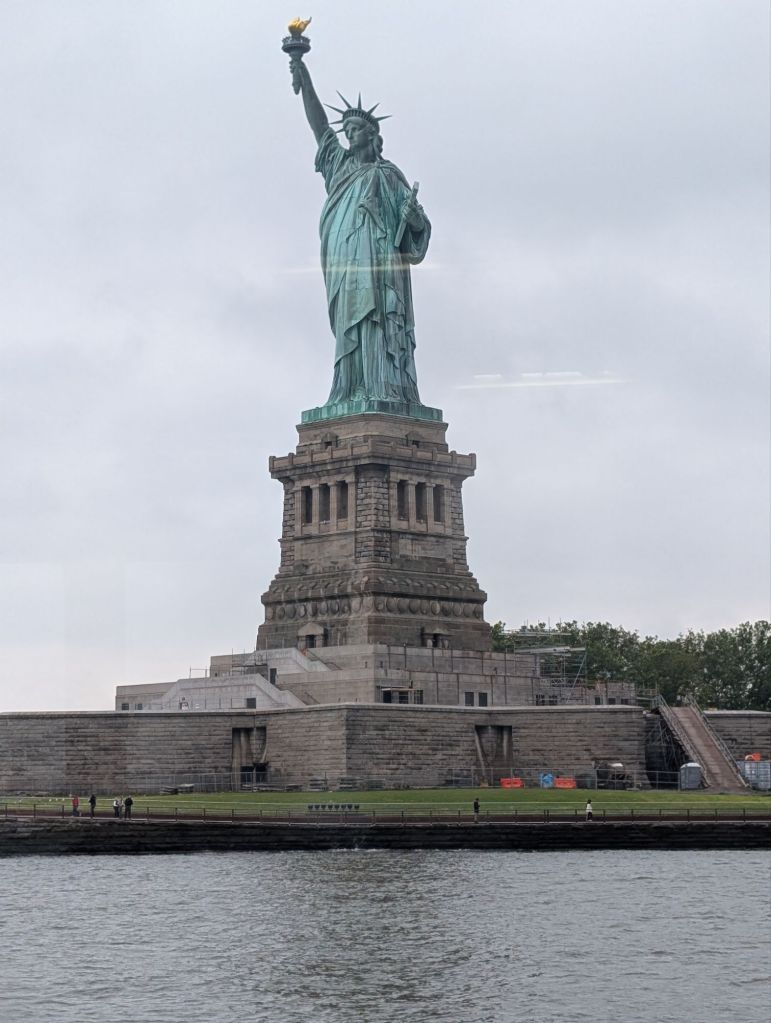
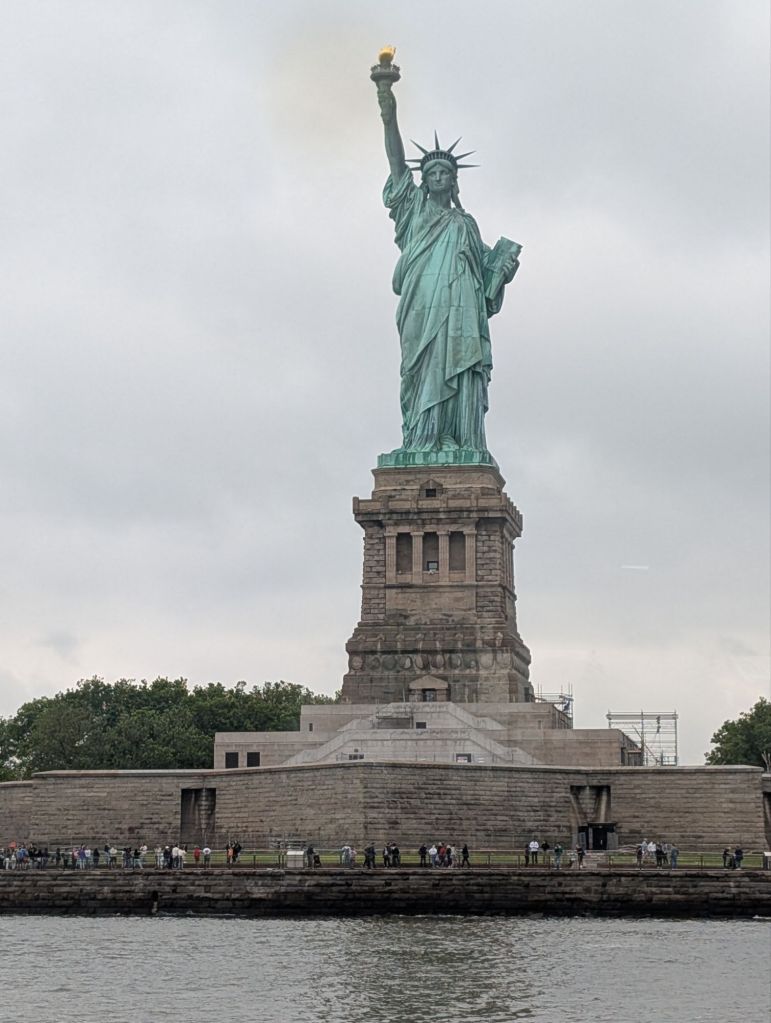
We docked and walked around Lady Liberty to the entrance for “Crown Reserve”. That’s right, we were going to climb to the crown!
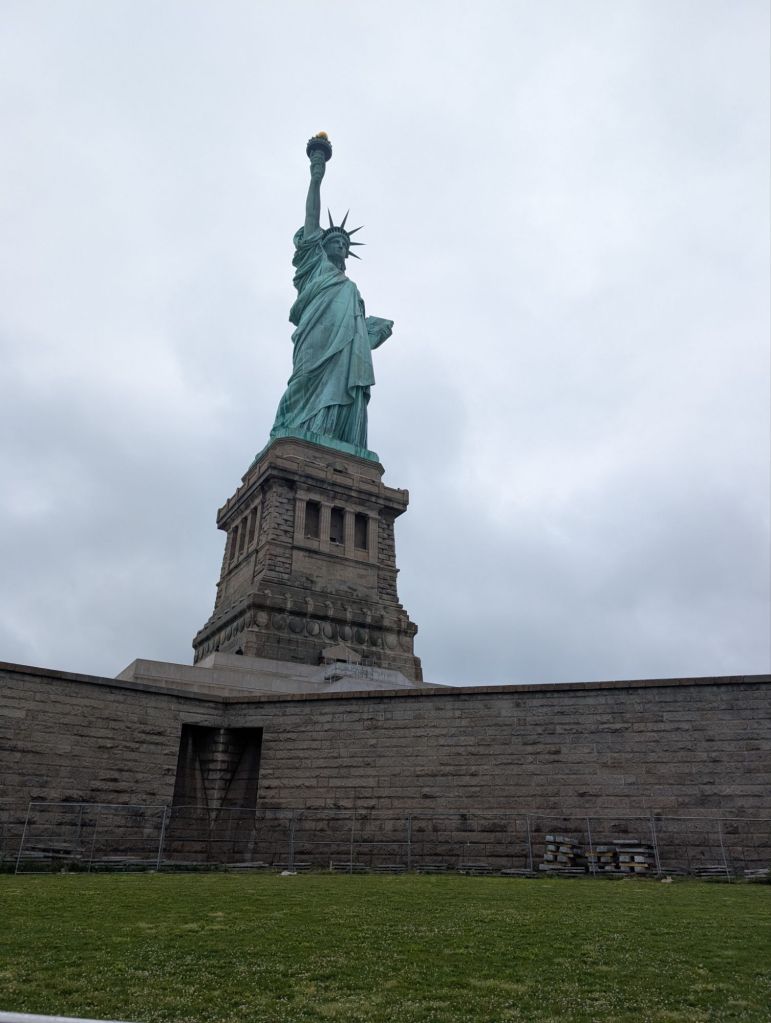
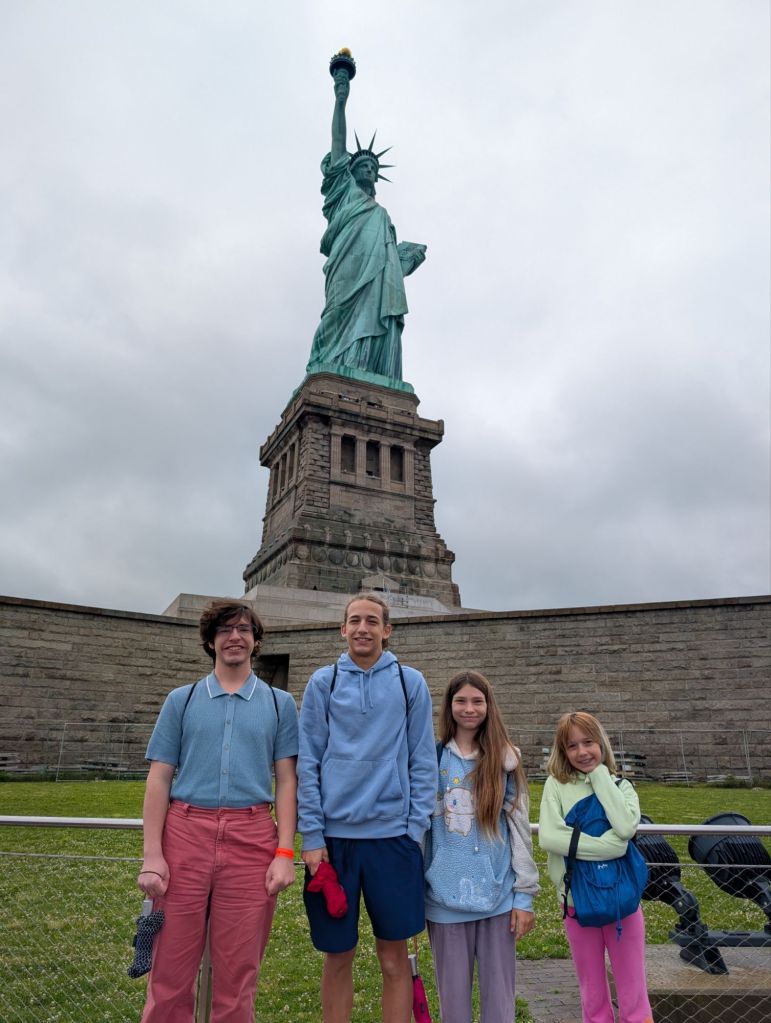
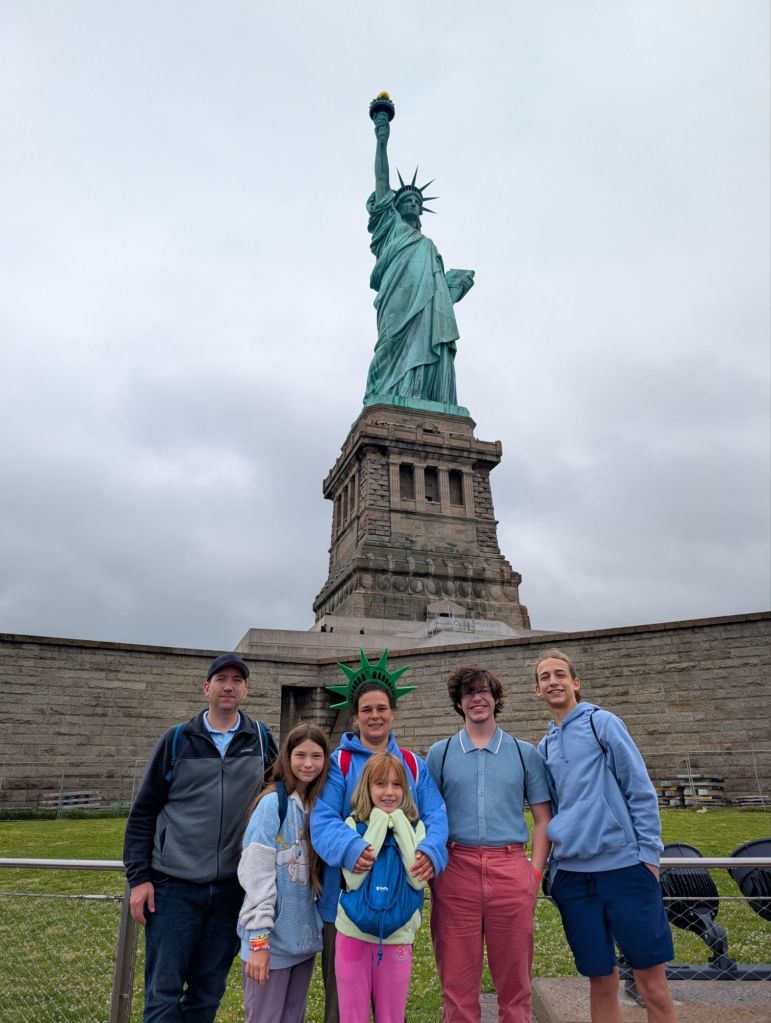
The view of Manhattan and Brooklyn from the pedestal 215 steps up:
We have some letters from Maria and Monica that talk about what it was like to move to the United States.

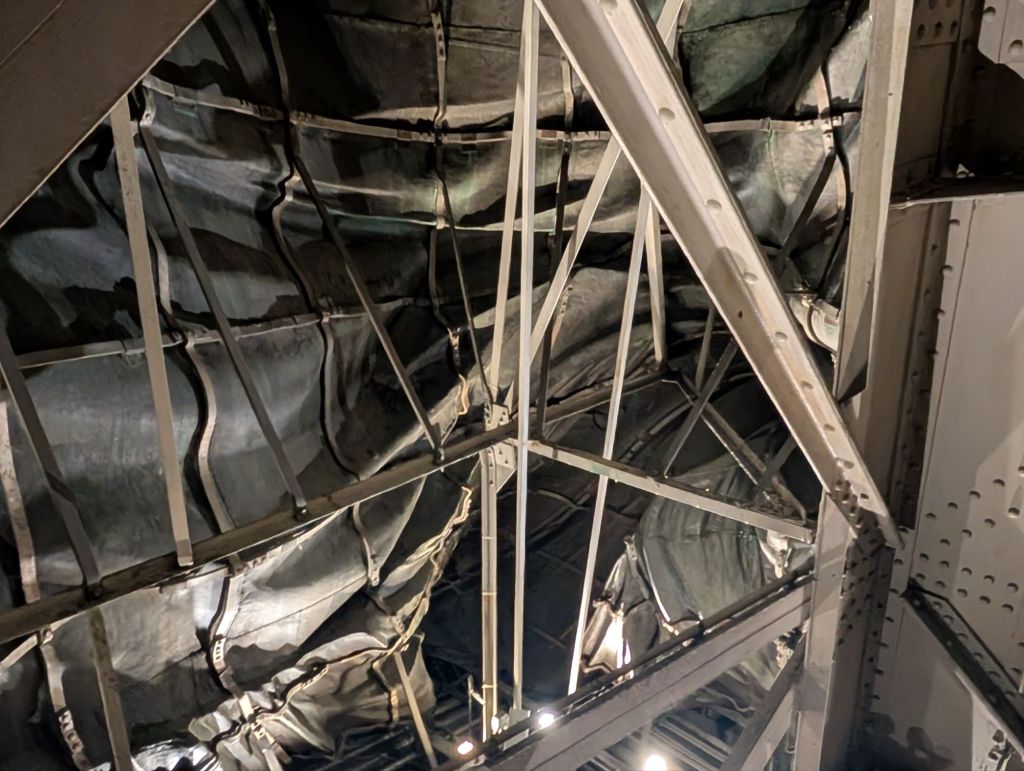
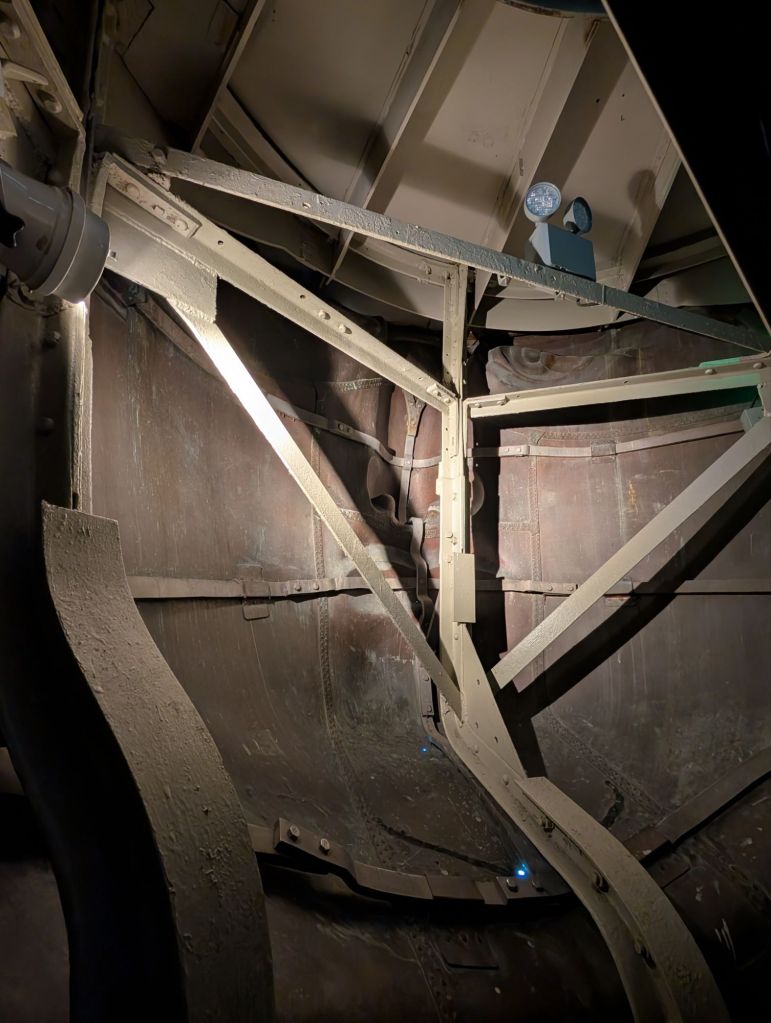
Once inside the statue you can see the support structure. It is an additional 162 steps to the crown. They sent us up in groups of 4 and asked that we limit our time at the top to about 10 minutes.
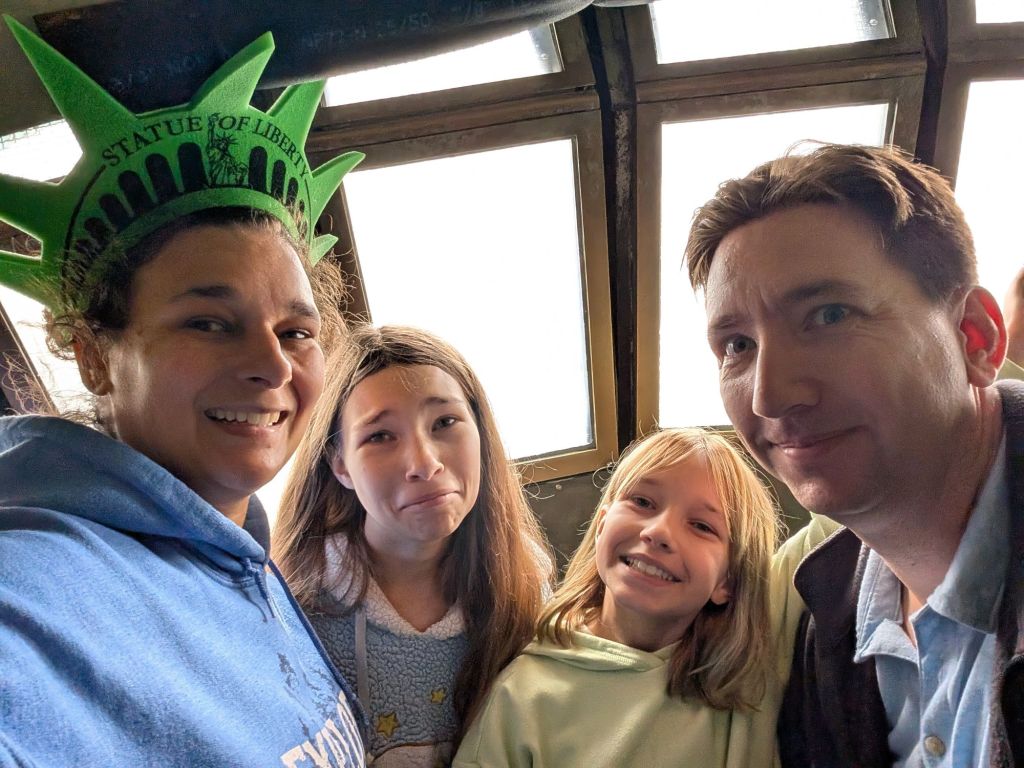
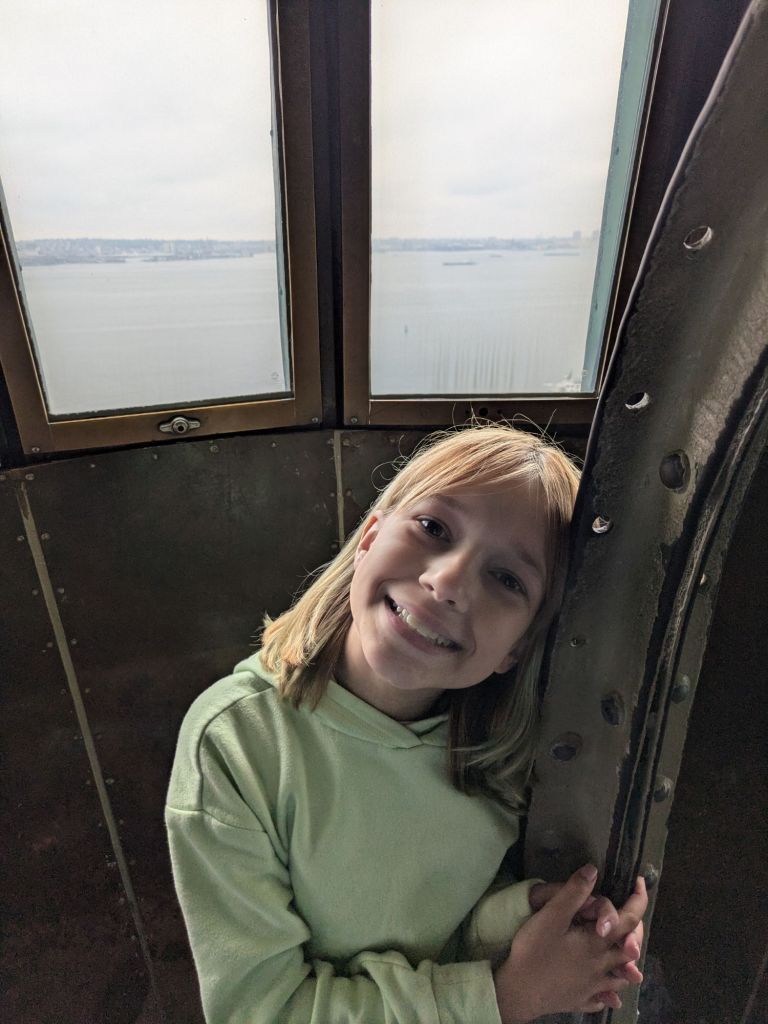
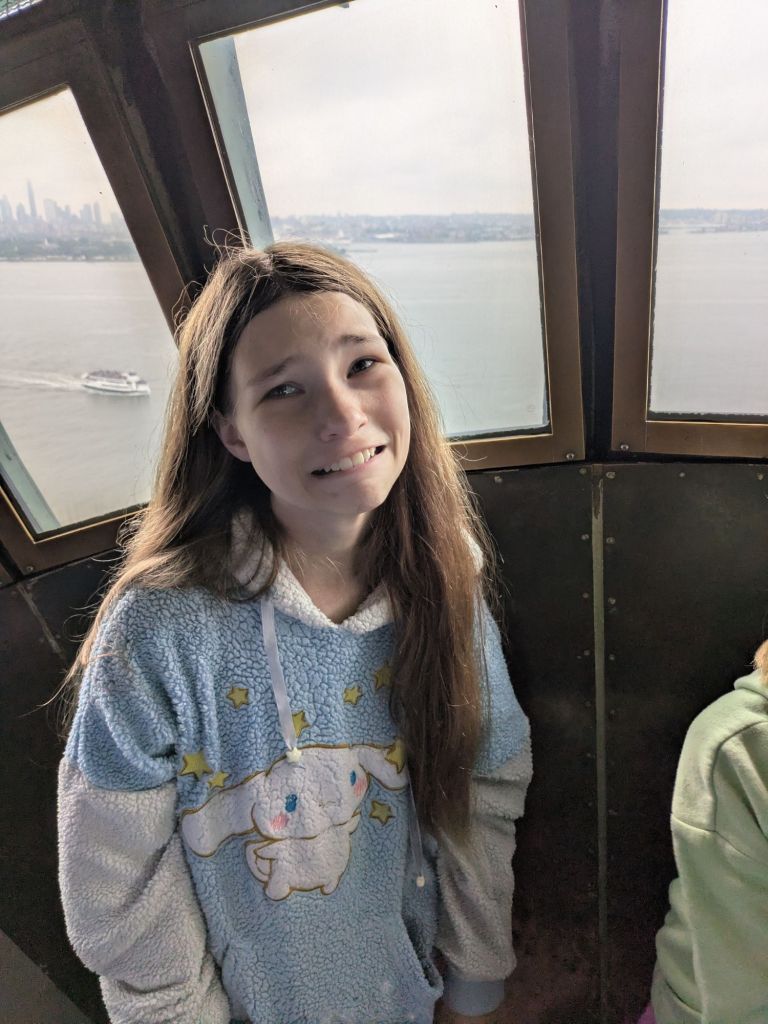
The view from the crown:

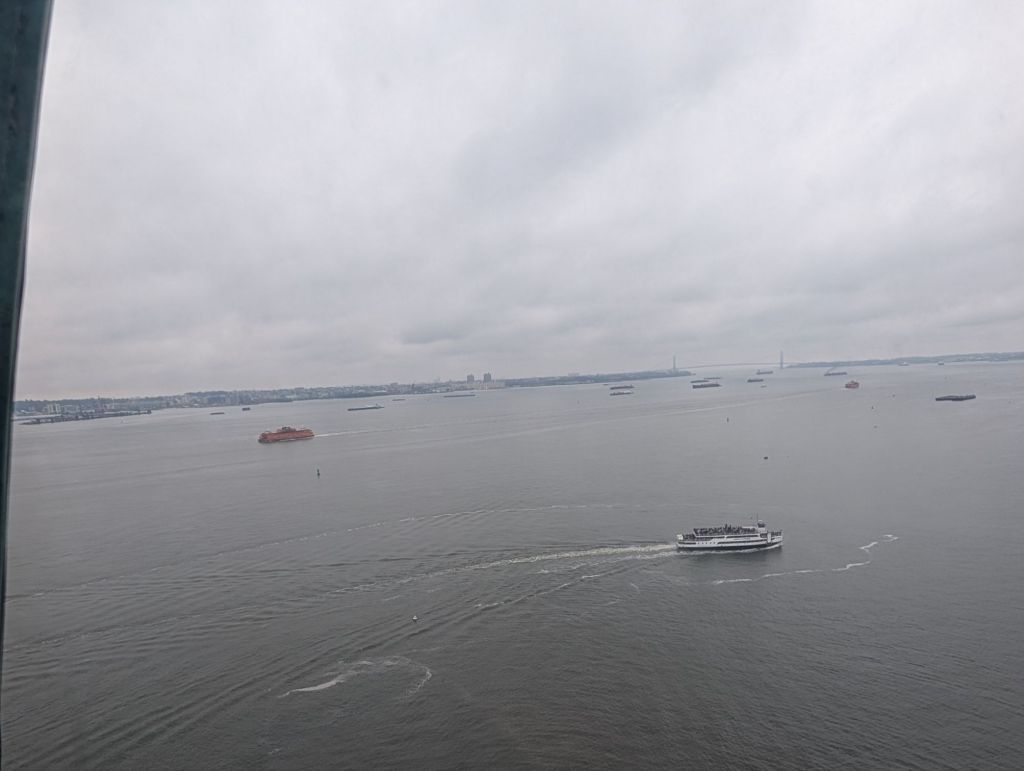
Cal says, “I leave you with a kiss, Lady Liberty” and kissed the inside of the statue before we left.
Esme said “What?? More stairs??”
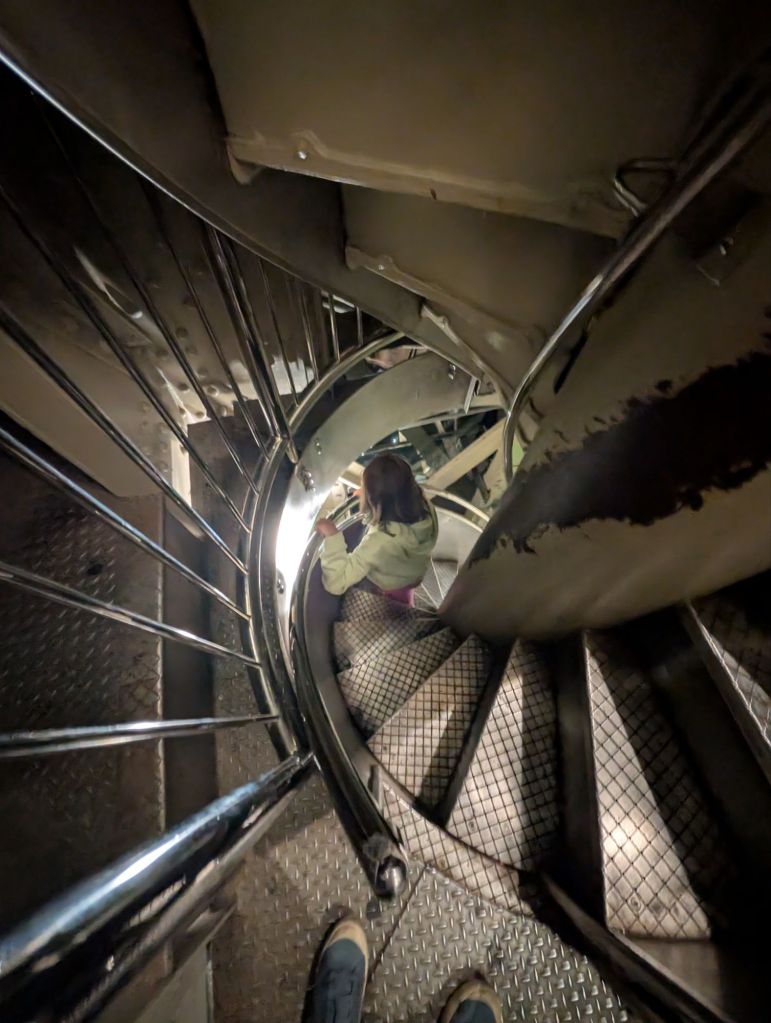
Nova said “I don’t like this” (regarding the narrow spiral staircase we had to climb) and “The statue’s smaller than I thought it would be”
This is the inside of her face:
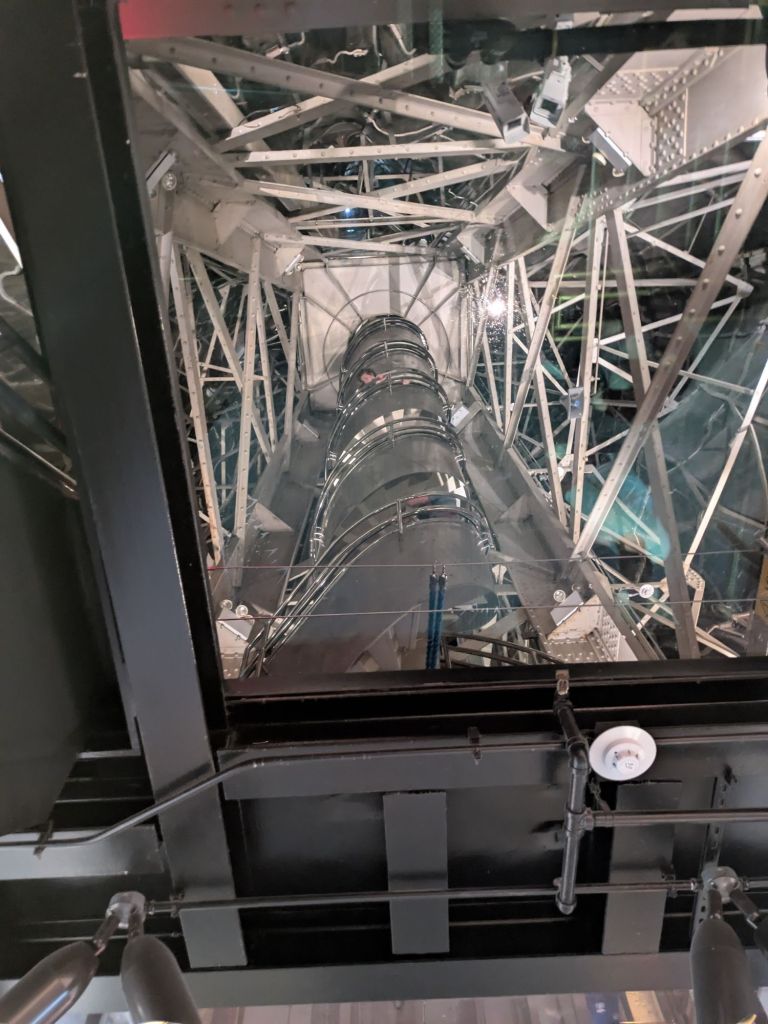
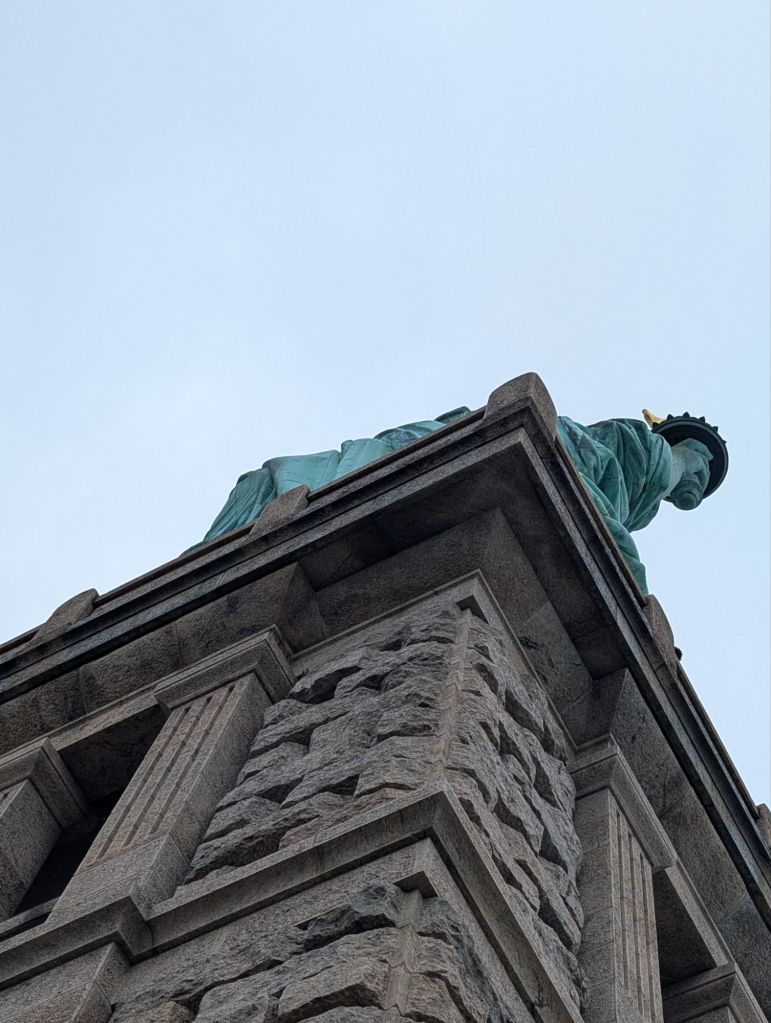
Looking up from the base
We found each other after climbing down and went to the museum on site to get Junior Ranger badges.
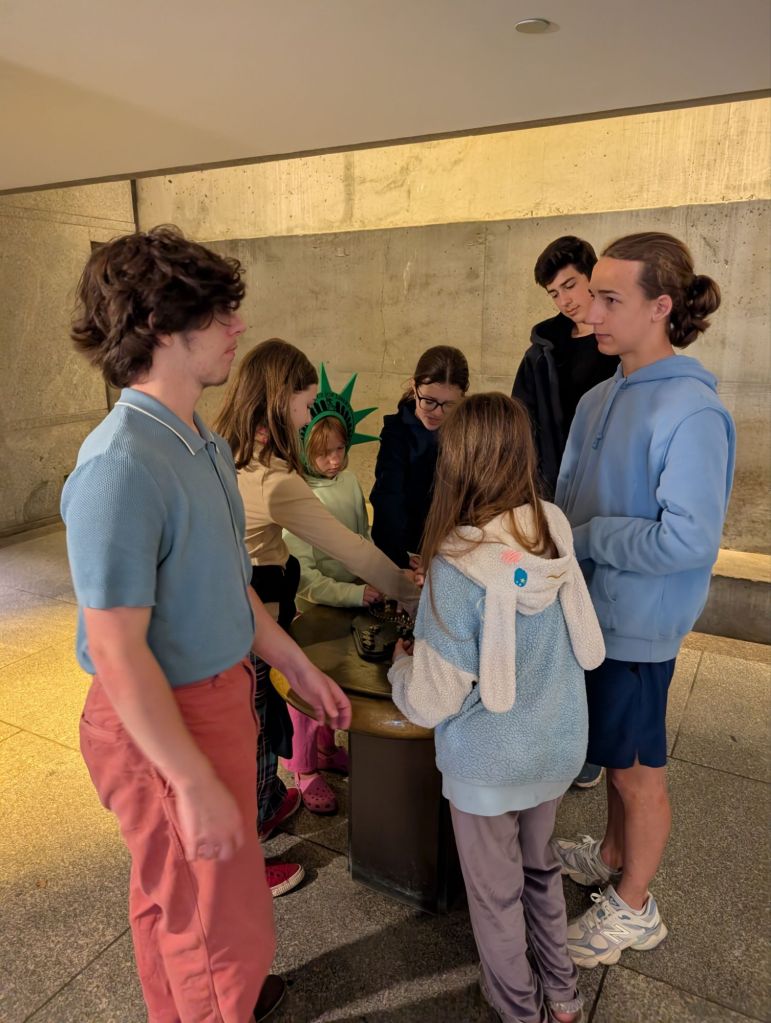
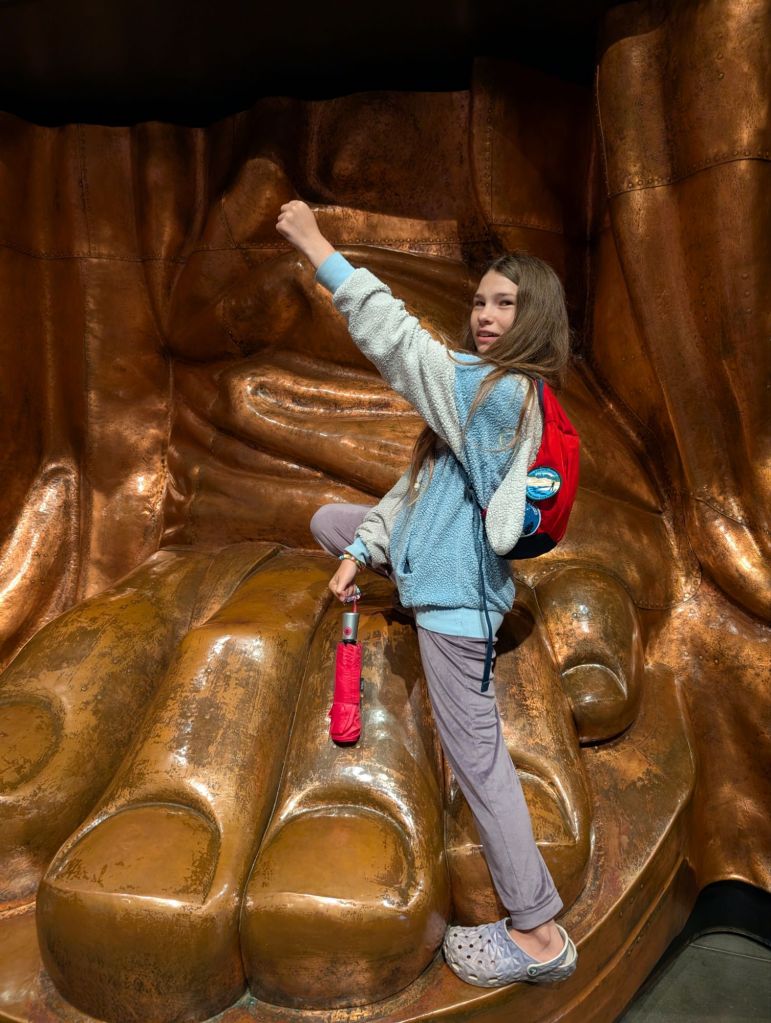
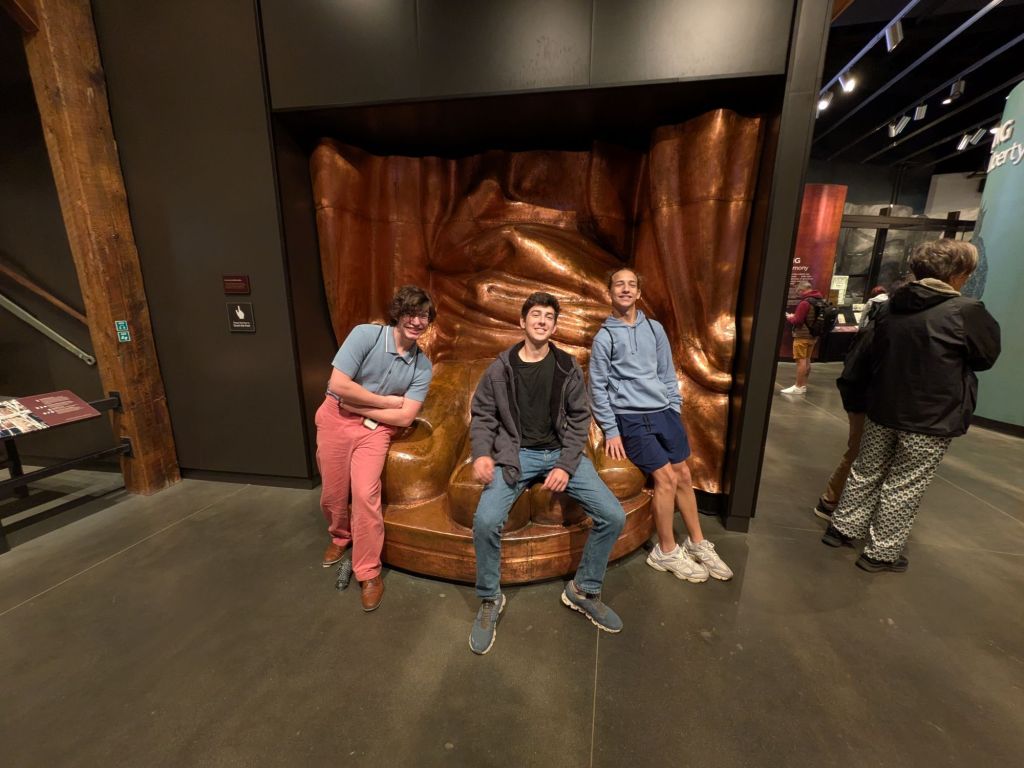
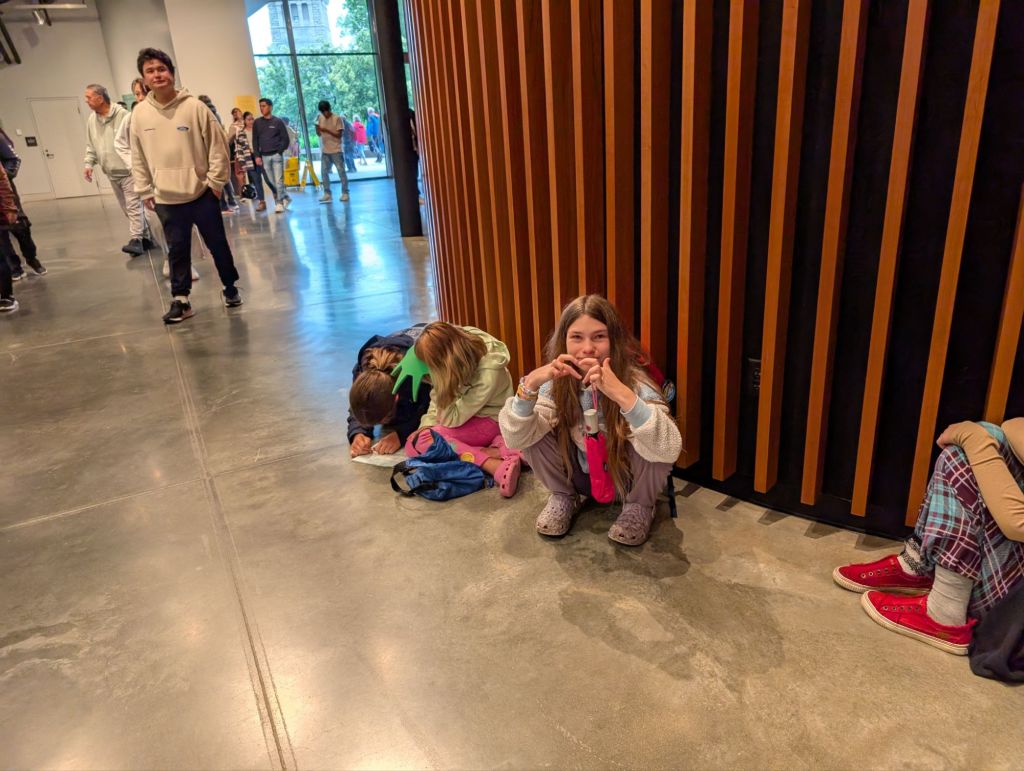
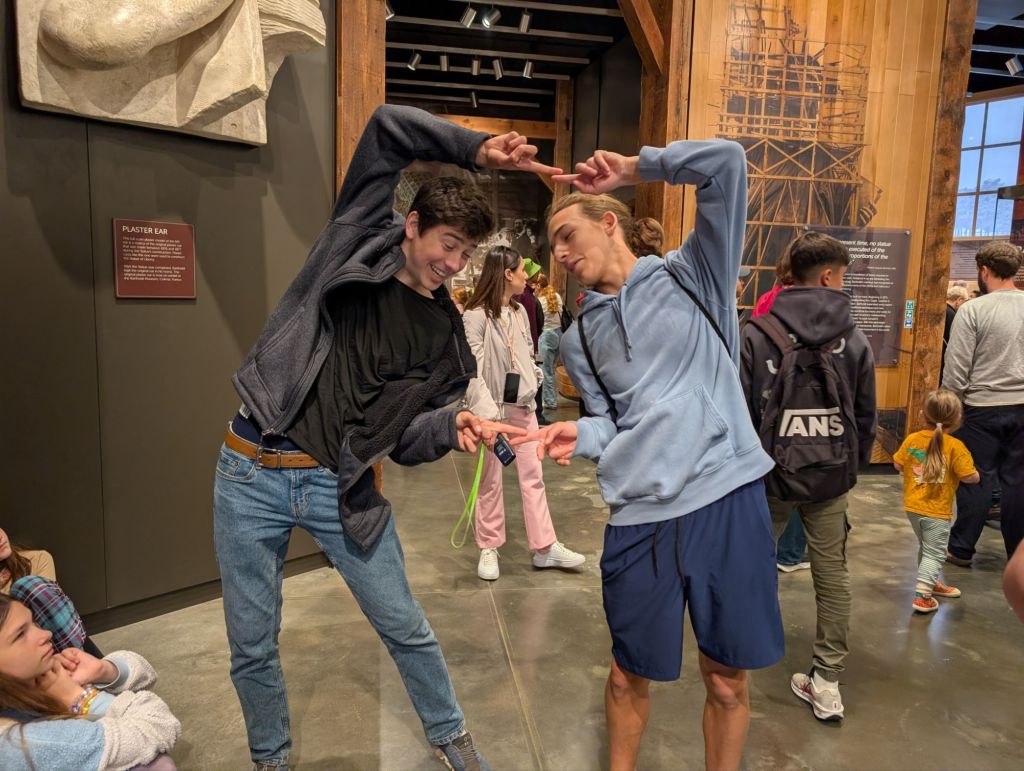

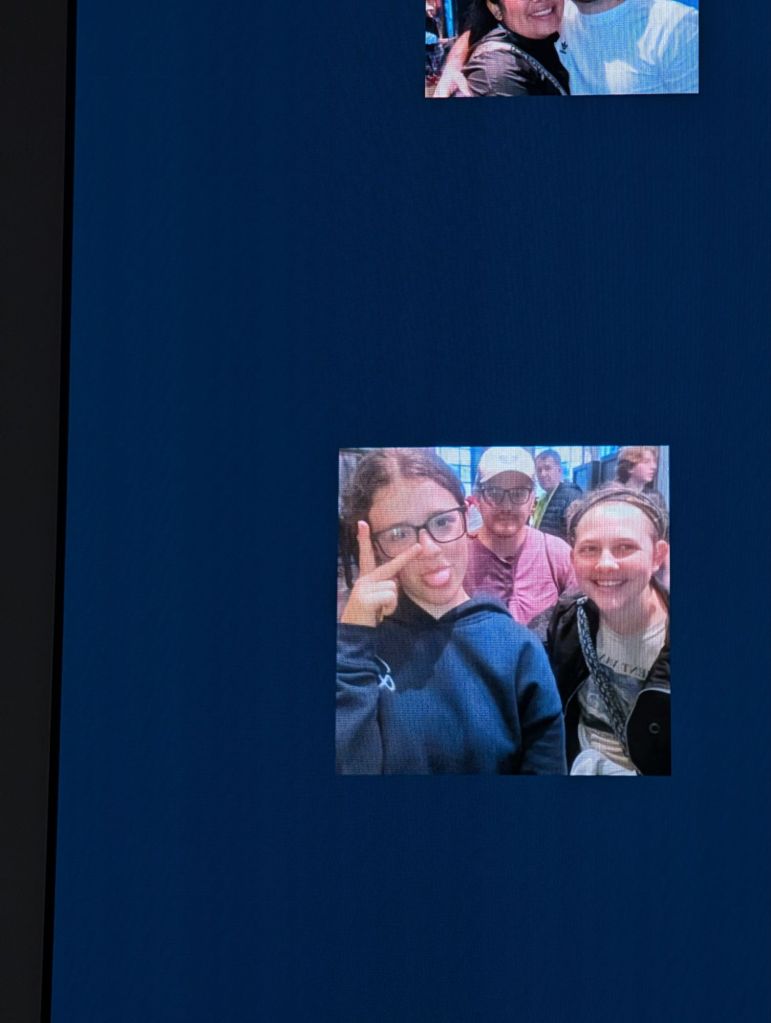
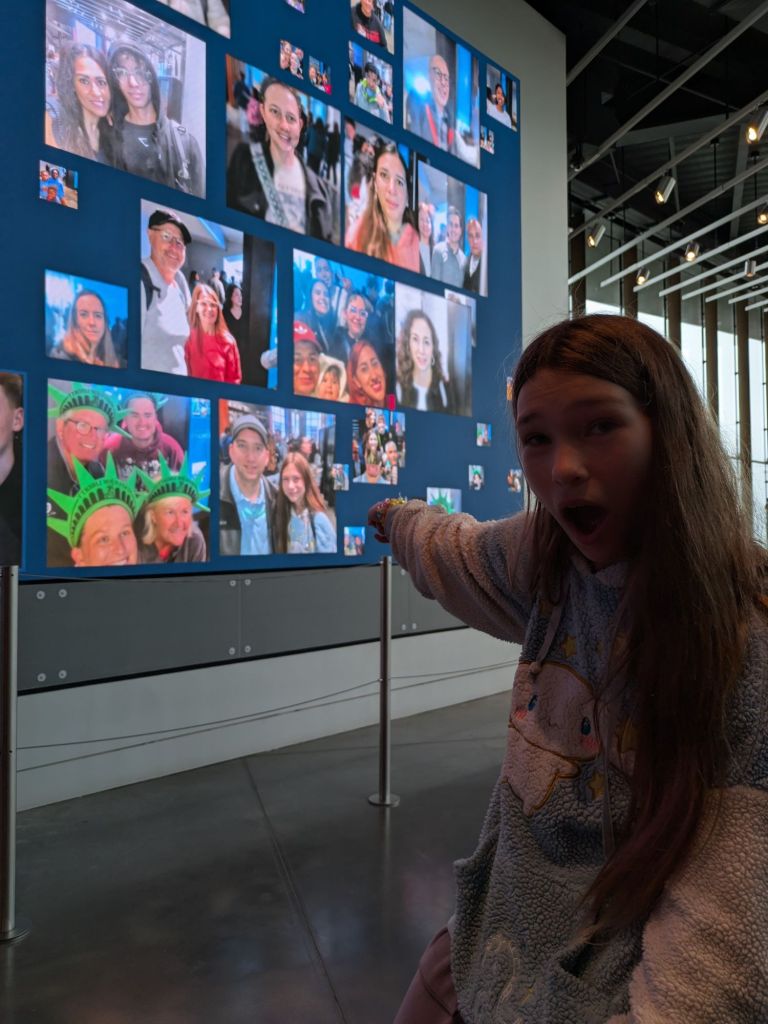
They had this interactive display where you could take a picture of yourself and it would show the pictures on a big screen. Here are some that our group took.

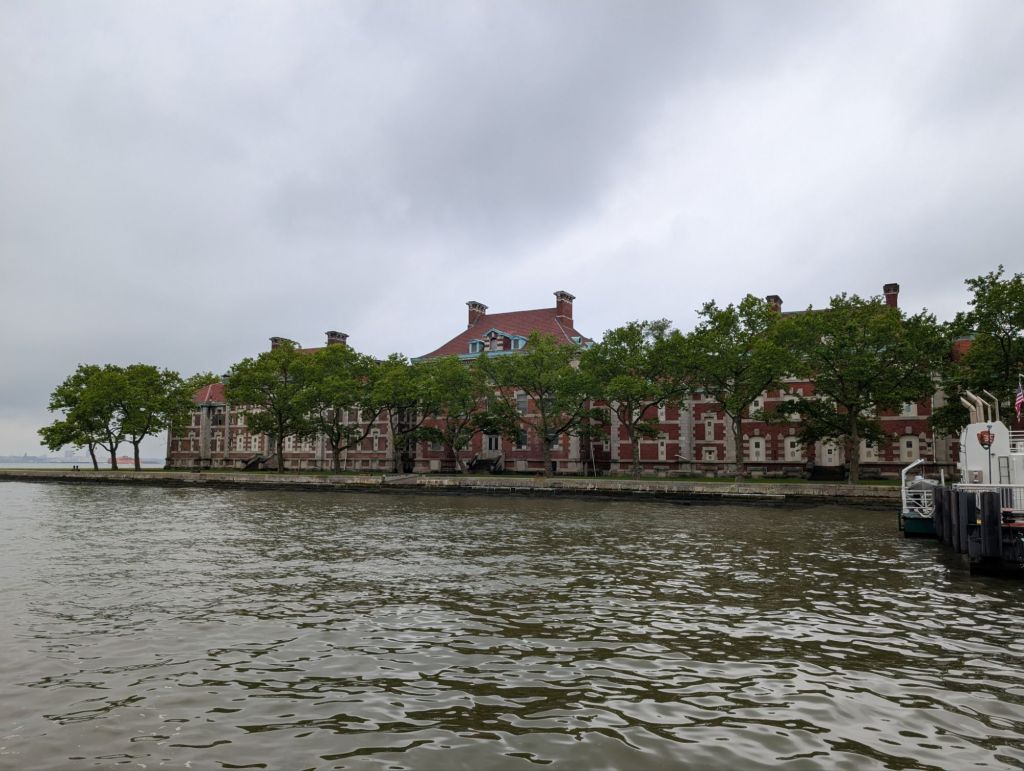
We got on the ferry again and took it to Ellis Island. They have a visitor center/museum there as well and the kids earned another Junior Ranger badge there. While there I was reminded that my grandparents and their families traveled through Ellis Island. They have a website where you can look up your relatives in the ship rosters.
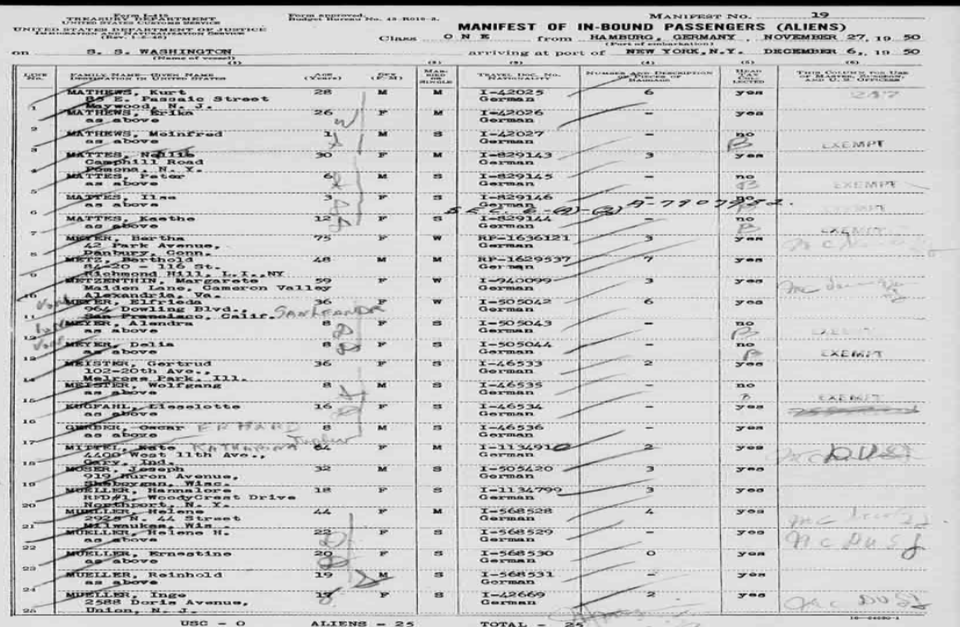
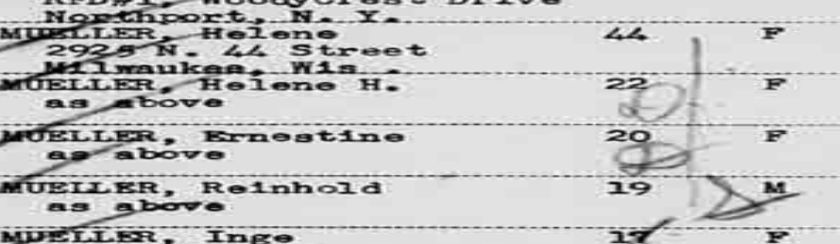
Here is my mom’s mother, Hildegard (Helene) Mueller with her mother and siblings who arrived in 1950:
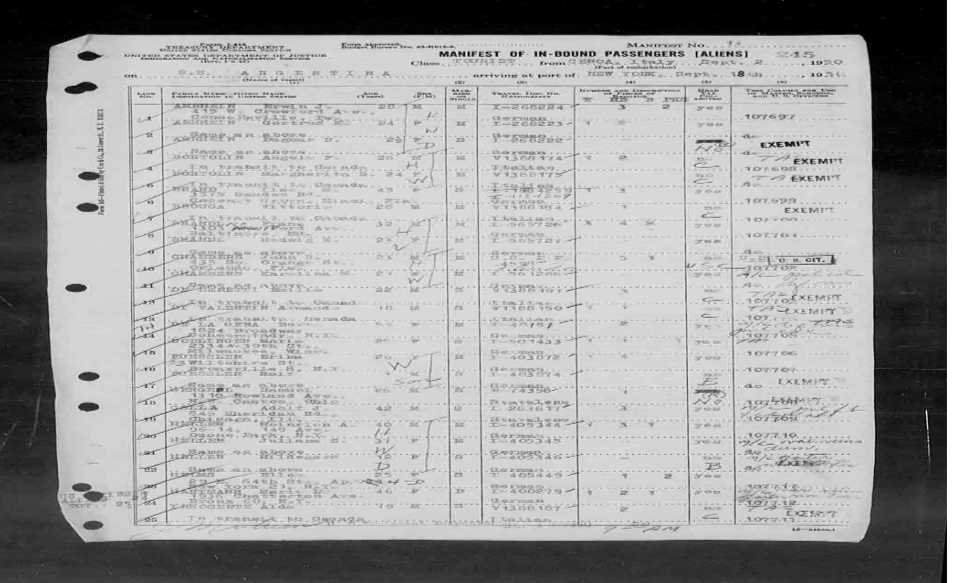
My mom’s father’s sister Maria (arrived 1950) and a letter she wrote about emigrating from Germany (which was given to us by family recently):
Milwaukee, 22. November 1994
Dear Arthur:
Thanks a lot for your letter. Time flies when you think about whether and what could be useful for your purpose. So I have to get to work and write down on paper what you can experience with such an emigration. The main reason, like so many others, was the economic situation that affected us and moved us to emigrate. In my case, however, a good dose of adventurous spirit was also crucial. I always had fantasies of wanting to go far away and then come back later and tell you all what it was like. As is so often the case, some things turn out differently than originally planned.
At that time, in order to immigrate to the USA, you had to have a sponsor who was a US citizen and who recognized you in writing. “…so that you do not become a burden on public welfare when you arrive there…”. Uncle August Biendl was my sponsor.
On August 31, 1950, my train left the main station near my home at around 8:00 a.m. Of the Keilbergers, only our neighbor Amann (Russ) came out to say goodbye to me. Mother and my two brothers accompanied me to the train station. Everything went smoothly. Then the train started rolling, and went all the way to Munich. We continued south. At 7:00 p.m. the train reached the Brenner Pass. Those who boarded all spoke German and Italian. From there it goes down the valley to Verona, where I had to change trains towards Meiland.
On the train I met a family who were returning to the USA with five children. The children were born in Milwaukee, so they had civil rights. In Verona I helped them with their luggage and then I didn’t see them again. I arrived in Genoa, Italy, around 9:00 a.m. on September 1st and was taken from the train station to a hotel. It was all prepaid by the travel office in Milwaukee. I was given pocket money of 15 dollars. You then had to register again with the ship company in Via Balbi in order to be able to board the ship on September 2nd. What I never told anyone was that there was a bang on the door of my hotel room that night because they probably wanted me to share my room with another traveler. I didn’t move and they finally left. It was just men’s voices and I was scared.
The next day after boarding the ship, which was our home for the next two weeks, I was among people just like me, all were emigrants, and we visited together after sea-sickness was overcome. There was a family with three older children who had returned to their village before the war. They had lost their apartment twice in bomb attacks, the man was drafted into the military and was taken prisoner. Since children were US citizens, they could come back to the US but they had to start all over again with nothing (no money, non house, etc).
Like Columbus, we sailed from Genoa, then arrived in Naples, where we could go ashore and see the town in groups. Once the others went into a shop and I waited outside. Once I was surrounded by men: I heard “Bella bionda” which means “Beautiful Blondie” in Italian and quickly disappeared into the shop to join the others.
In the evening we continued to Cannes, France. Ocean ships have to dock quite far out there and loading and unloading has to be done by boat to and from the coast. We had to stay on board in Cannes and arrived in Barcelona, Spain around the middle of the next day. We stayed for a few hours. The harbor district there is not all that pretty. In the evening we continued through the Strait of Gibraltar into the open ocean (we had only been in the Mediterranean sea so far). After we passed Azores, Portugal, a storm arose that lasted two days and three nights. The folding chairs on deck were washed away where people had been sitting just hours before. One rudder of the ship had broken, and four ships had banded together to brave the storm. Tables were sometimes sideways and most of the passengers suffered from terrible sea-sickness. In a storm, everything gets tossed around and so does the stomach. The food was miserable anyway, but there was wine with every meal. When the storm was really raging, I had no appetite for anything, but with my money reserves I was able to afford some crackers that kept my stomach under control. So I remained one of the few toughies who survived the storm without fainting.
When the sun shone again, it became very cozy. I then noticed a group of students who wanted to go to the University of Beloit. One of them named Sperl was from Regensburg (near where I was from). I met him again a year later in Old Heidelberg Park in Milwaukee.
In Halifax harbor (Nova Scotia, Canada) we sang: “No beautiful land” and “The Moon has risen”. On September 17th, 1950, at 6:00 p.m. in the evening, we entered New York harbor and were finally able to leave our boat, the S. S. Argentina, on the morning of September 18th. There was a huge crowd, but there were women from Travelers Aid who looked after the travelers. Those who looked after me spoke German. How much I wished that I would have been picked up from New York like some others but I still had a thousand miles ahead of me.
I was taken by taxi to Hoboken, New Jersey, where I sat for six hours waiting for my train to Chicago to depart. I took a lot of medication to keep my migraines under control. There was a grocery store and bakery where I bought some provisions, including a huge bar of chocolate that cost 39 cents. All together it came to 85 cents. I didn’t think I was hearing it right (since food was so expensive in Germany, this seemed too cheap!), but I also wanted to be careful so I didn’t run out of money. You could have to make a phone call or need a taxi and without money I would be in trouble! I already knew that at 26 years old. A nice man spoke to me in German and offered me sandwiches because he worked as a cook in a hotel. So I met good people who were willing to provide information and help along my way.
On the train I spoke to Marygrace Ryan, a student who wrote a note to the train conductor: “Take good care of this young lady, will you.” When we arrived in Chicago, it was already the afternoon of September 19th. From Union Station I was taken to the North Shore train, which then took me to Milwaukee. Not knowing what the house numbers were, I got out at 2300 South instead of North. A couple who recognized my need then took me by car to the train station. Uncle and Aunt Biendl were just about to return home without me because I didn’t get off the train.
After just a few days I looked for work because I had $325.00 in debt to pay back. The minimum hourly wage was 65 cents and I got 55 cents. When you are in a dependent position, you have to keep your mouth shut and keep working. In March 1951 I finally finished paying it off.
While we’re on the topic of this chapter, the Minx family comes to mind. A long-time acquaintance, now in her nineties, came to Milwaukee with her parents in 1925 as the eldest of seven children. Irma was twenty-one, the youngest was three years old. The mother was in her forties and the father was 51 years old. When they landed in New York and no one spoke English and the children pushed the mother forward and hid behind her. The woman from Travelers Aid asked: “Your name? What’s your name?” Mother turns around: “What else does she want to take from us? We don’t have anything anyway?” The two older girls had to be hired out immediately as household help to rich people in order to be able to repay their uncle for the trip for the family of nine. Irma received eight dollars a week, five of which she had to deliver to her home. One dollar went for a tram ride. She kept two to herself. For me it wasn’t until March 1951 that I was able to put something aside.
Although I knew the language verbally and written, I still went to night school for two winters and one summer. Firstly, to improve language skills and secondly because of the socialization. Most of the students were Balkan Germans who had emigrated as families. So I found enough friends and there was no lack of entertainment. Some young men already had a car and so they would take me wherever there was something going on.
In May 1952 my brother Alois came (Nova’s great-grandfather), and Uncle Biendl graciously paid for his trip; I had to pay for mine on my own. Alois also immediately got a well-paid job.
My husband at the time, who was a citizen, was later the sponsor of my mother and my sister Monika. The relatives were so angry they hadn’t been chosen as sponsor, that they wouldn’t even go to the train station to pick her up. Luckily, my friend Erika and her husband had a car and provided this service. Monika was 24, our mother was 57. My husband and I separated. Why did I leave the man after such a short time? “I thought I had married a deer, but he turned out to be a moose.”
There was no shortage of work opportunities in the USA. Uncle Biendl was employed at the Borden dairy plant until he reached retirement age of 65.
There are still a few large companies such as Briggs & Stratten or Allen-Bradley that employ thousands. But most of the heavy industry has left Milwaukee and Wisconsin as a whole. Allis-Chalmers, which once employed 15,000, closed its doors, and Schlitz Brewery, a Milwaukee institution, did the same in 1981. Other companies relocated to the southern states and Mexico because of lower wages. In the industrially poor areas of the south, people are more willing to work for less pay.
On a side note, the day after tomorrow is Thanksgiving Day, a type of harvest festival that is attributed to the Pilgrims. They were a religious group who were pushed out of England and landed in what is now Massachusetts near Plymouth Rock. In the first year their number dwindled to around 83 people. Women and children in particular died because they could not cope with the inhospitability. Friendly Indians showed them how to fertilize the soil with fish. Out of gratitude for their bountiful harvest, the Pilgrims held a party to which they invited the Indian chief. But he brought 50 of his warriors with him, something the settlers were not prepared for. So the warriors had to shoot wild turkeys in the woods, which were then prepared and everyone could take part in the feast. This is where the tradition of eating turkey on this day comes from.
Now we Doblingers, Weigels and whoever else is around will gather at Benno’s house in New Berlin and enjoy the feast.
Hoping to see you again, Your aunt Maria
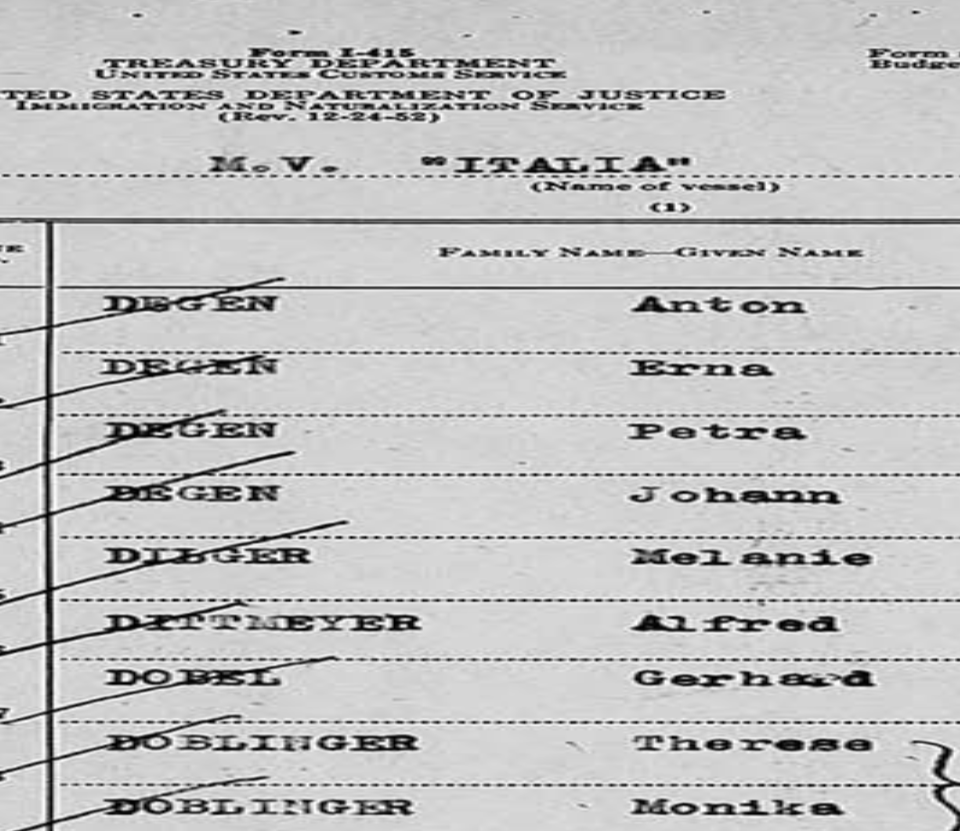
And his youngest sister Monica (who also wrote a letter) and their mother, Theresa who arrived in 1954.
Milwaukee 10/19/94
Dear Arthur,
Finally, I get around to writing to you. Shall I start? I’ve already thought about it back and forth. I also rummaged through old photos and letters.
I was born on April 23, 1930 in Zwiglmuehl. My parents’ siblings emigrated to Milwaukee WI and Springfield OH after the First World War, so we had connections to the USA.
Maria and Alois had already gone in 1950 and 51. Brother-in-law Heinz wanted to vouch for my mother (your great-grandmother) and me. So on the 21st March 54 we took the train from Regensburg to Hamburg.
Everyone in the family was still on the train saying goodbye when it set off and your grandfather had to quickly jump off with your mom.
The ship passage cost 1550 for 2 people and could be paid for in Deutsch Marks. The emigrant ship 68 Italia left Hamburg after 4 days and we stood outside until the land had disappeared. It took us 7 days to get to New York and along the way, more and more emigrants boarded in LeHavre, Southampton and Halifax. Mother and I were very seasick and we wished we had stayed home.
From New York we took the train via Chicago to Milwaukee. At first we lived with my sister Maria and brother-in-law Heinz. At the beginning it was very difficult for us, everything was so different and so foreign. But I soon found work with one German banking family with 7 children. The Teipels were very wealthy. I took care of the housekeeping and Mother was the children’s nanny.
We slowly settled in, including Mother, and she even went to language school with us (at almost 60 years old). Previously in Germany, only I learned English.
It was a happy time for us after the bad time in Germany. We had a lot of friends and often went out. Milwaukee is the most German city in the USA, it has many German shops, often in the 3rd or 4th generation, many German clubs and the Karl Schurz Park. The Germans were well received here because they are hard-working and popular with the neighbors.
From the time I got married in 1956, I worked in a factory. Mrs. Teipel said as I left: “Monica I will miss you, it was a very good time.” Our first son Benno was born in 1957 and we bought our first house. Martin was born in 1959. When my mother went back to Germany for a year, I didn’t work anymore. In 1961 we bought a new house in a better area because the old neighborhood was changing. We had a lot of work to renovate the new house. We painted and it became a very nice home for us.
Mother bought her own house in 1970 (at the age of 74), Benno and Martin helped her renovate the house and with the landscaping. Mother died in 1980. Her grave is next to her sister Maria, who died in Milwaukee in 1930, 50 years earlier. I myself attended high school here and trained as a nurse. I then couldn’t work as a nurse anymore because I got MS. When my husband died in 1990, I sold the house in Wauwatosa. Benno and Martin have an restaurant that is doing very well. I live there and help out. I often talk to your grandmother on the phone because I’m not a good letter-writer.
I believe that in Germany we would have achieved everything like we did here. Everything is so beautiful there now. But in the bad times after the war we were not making any progress. Who believed in a German economic miracle back then? I hope you can do something with what I wrote. Maria and Alois will also send something. Many greetings to everyone.
From your aunt,
Monica
That’s a lot to read so I’ll leave it at that for now. I’ll do a separate post about the rest of our day.
 Martins Take Flight