Besides driving stick shift, which those who have been following know is new to me, learning to drive in France is a whole other skill set. I’m kind of surprised they let tourists drive in other countries at all after this experience because it’s a lot to learn. The signs and rules can be very different.
Here are some examples:
No turn on red. It’s illegal so just don’t do it!
Traffic lights are mostly just on your side of the street. Don’t pull too far forward or you won’t be able to see when it turns to green.
Bikes, public transport and pedestrians everywhere in cities. One Airbnb host also explained that in cities many people don’t ever get a driver’s license and don’t understand the rules of the road. Dealing with bikes, scooters, trams, buses, and pedestrians is like an extra set of traffic. If you’re not used to city driving in the US, I definitely wouldn’t attempt it here. You also encounter a few bikes on country roads. You need to pass them safely just like in the US.
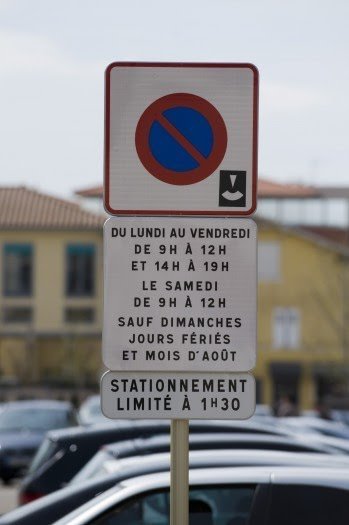
Street signs are not the same and not as intuitive as I thought (after all most are just pictures right?). At first I was confused by the blue circle with the red light through it thinking I was the wrong way on a one way street but it just means no parking. Also sometimes they show the no parking sign and then below have exceptions like except during certain hours or for a short period of time.
Speaking of one way streets, there are lots of those too. And lots of streets that are two way but only one lane so you have to slow down and drive on the shoulder (i.e. the grass) if a car comes from the other direction.
Cédez à droite. Otherwise known as the right of way. Basically you yield to traffic on the right at unprotected intersections. Many times the cross traffic has a yield or stop sign so in that case you don’t give them the right of way. In small towns there a buildings built right on the corner of the street (no sidewalk) and you can’t see around it until you’re almost past it. You need to slow down enough here to see if there is any traffic from the right that you must yield to.
Passing. You will get passed. Lots and lots of you drive slow like me when I’m looking for my turn or on curvy mountain roads. Slow down and let them pass. I’ve learned to slow down when someone is riding my tail to speed the process up too.
Speed limits. There are assumed speed limits in France. If you are in city (marked by white rectangular signs staying the city name) the speed limit is 50 kph unless marked. There are lots of 30 kph zones where pedestrians are common. These are marked and also easily noticed because of speed humps and barricades that reduce the road to a single lane and force you to reduce your speed. When you leave a city (noted by signs with the city name with a line through it) you can drive 90 kph unless marked. In many places there are steep inclines, curvy mountain passes, or other obstacles to actually reaching 90 kph but some drivers try (see section on passing). Highways are usually 110 or 130 and are marked. They also mark areas where they want drivers to slow down (like off ramps) with their own speed limit signs.
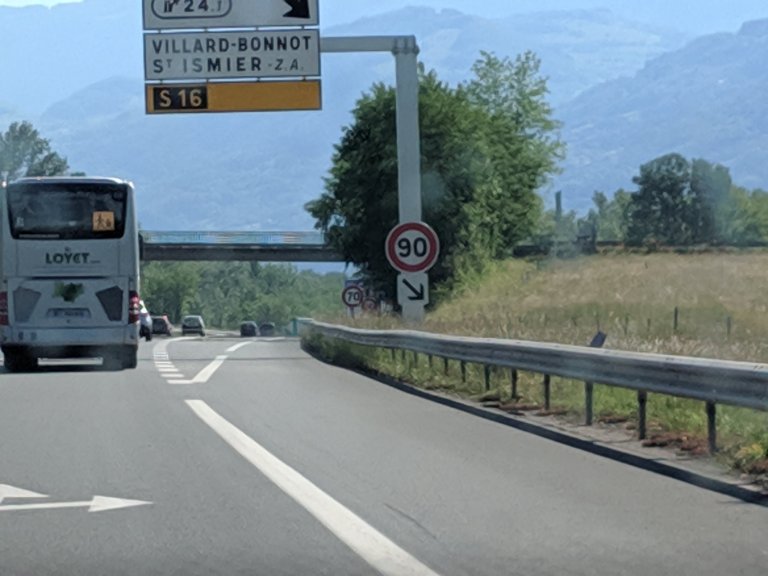
See the 90 and 70 signs here? Those are only for people taking the exit ramps so ignore them if you’re continuing on.
Our car has a display that tells us the speed limit. While this is nice it isn’t always accurate because it doesn’t catch all of the 30 kph zones, road work speed reductions and other temporary speed reductions.
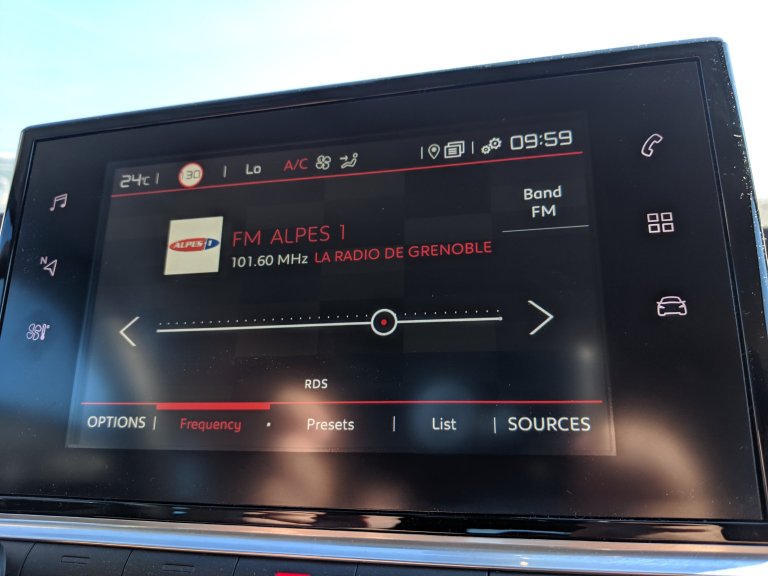
There are lots and lots of signs, probably just like in the US but there I know which ones to ignore.
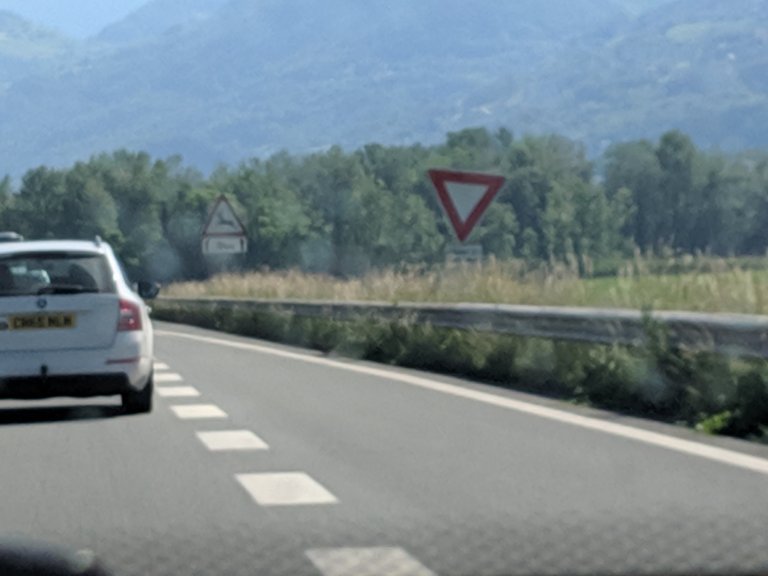
They don’t shield signs from drivers for traffic coming from the right (you need to know if you have the right of way or need to yield to that traffic). This yield sign is on the highway and is for the merging traffic to follow.
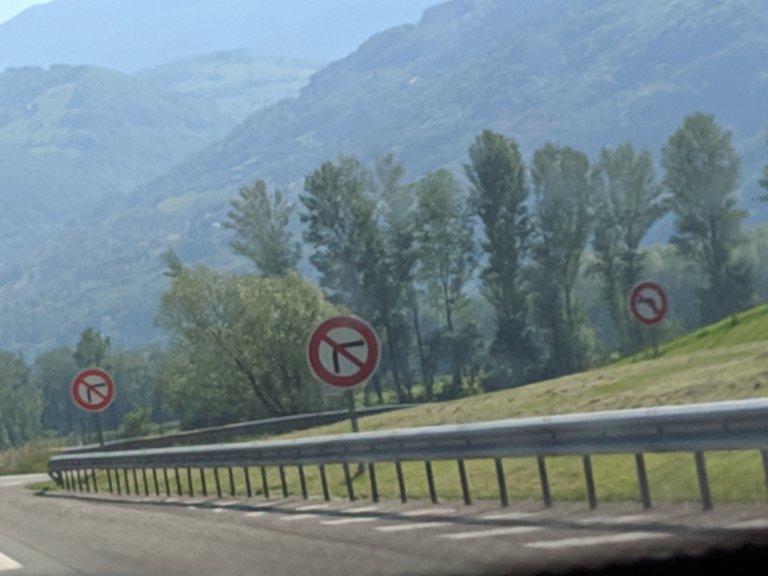
These are typical at end of all highway on-ramps. Don’t turn on to the on-ramp and also don’t turn left on to the highway you’re supposed to be merging with. Apparently these signs are necessary or people would attempt it.
On the plus side, having a car gives us a lot of freedom. Almost all of the places we have visited would have been impossible without a car. For cost, I am spending about 70€ per week on gas (it’s more expensive here than at home) and about 25€ per day on the car itself. There are also tolls if you want to take the big highways.
Google maps on my phone has worked great for getting us around. I love that her prononciation of French city and street names is worse than mine. Seriously though, I can’t imagine relying on a paper map. Google knows where there’s road construction and other slow downs. And, it has only tried to make me turn the wrong way down a one-way street once (pretty good if you ask me!).
All road photos were taken by Cal.
 Martins Take Flight